TriNetX faced low adoption and unclear differentiation among its healthcare organization (HCO) partners. My research uncovered why — and what would help partners realize the platform’s value.
ClientTriNetX
Timeline3 Months
RoleUX Researcher
Team1 Researcher, 1 Product Manager
The challenge
TriNetX was facing low adoption and unclear differentiation of its platform among healthcare organization (HCO) partners — particularly around the underutilized “Linked” functionality — prompting a need to better understand user perceptions, unmet needs, and barriers to value realization.
The approach
01
Immersion
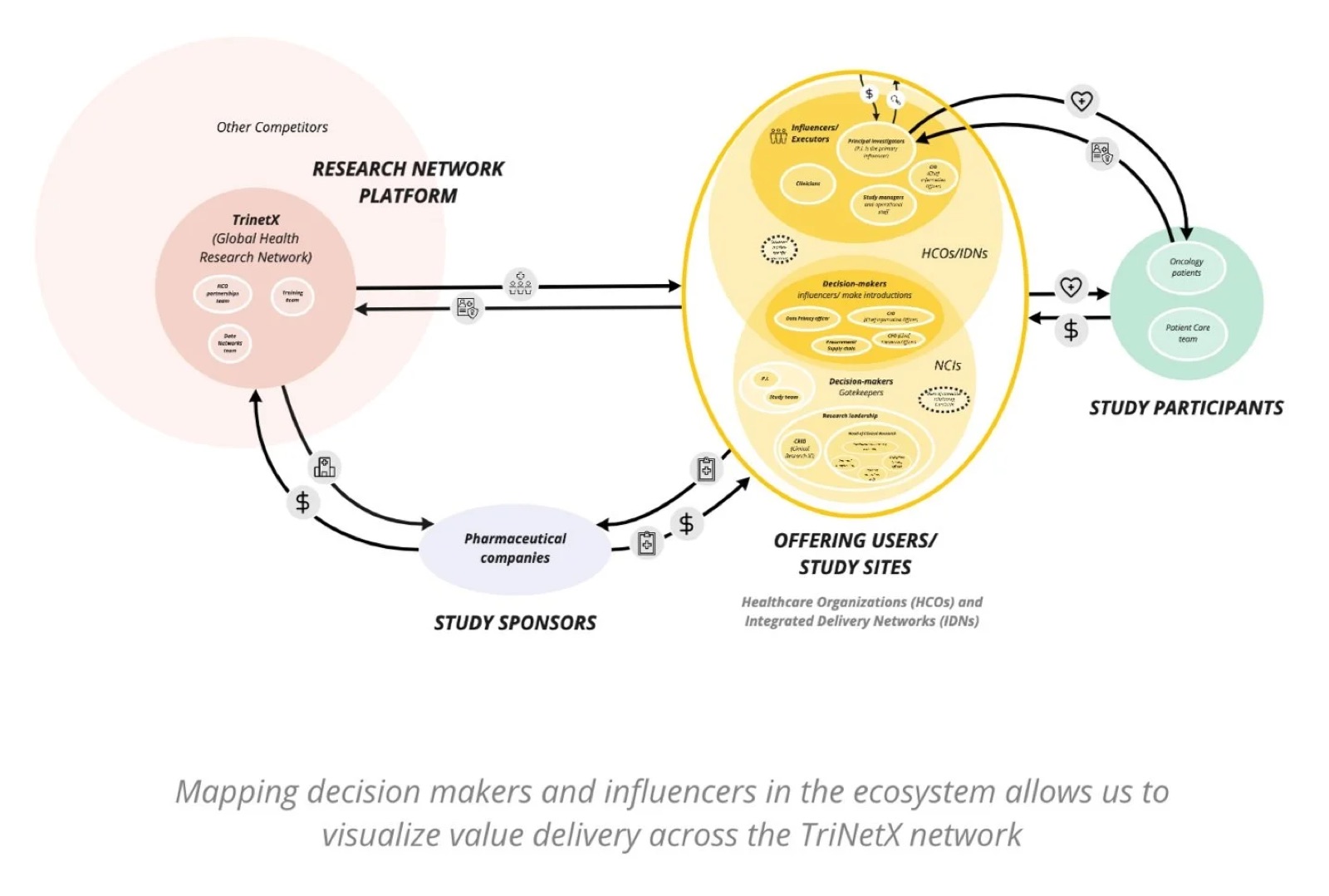
To understand TriNetX’s business model, I created an ecosystem map visualizing how different user groups engage with the platform, their workflows, and the interdependencies across business sectors. This surfaced key touchpoints, pain points, and opportunities for alignment, informing a more holistic and targeted research approach.
02
Competitor analysis
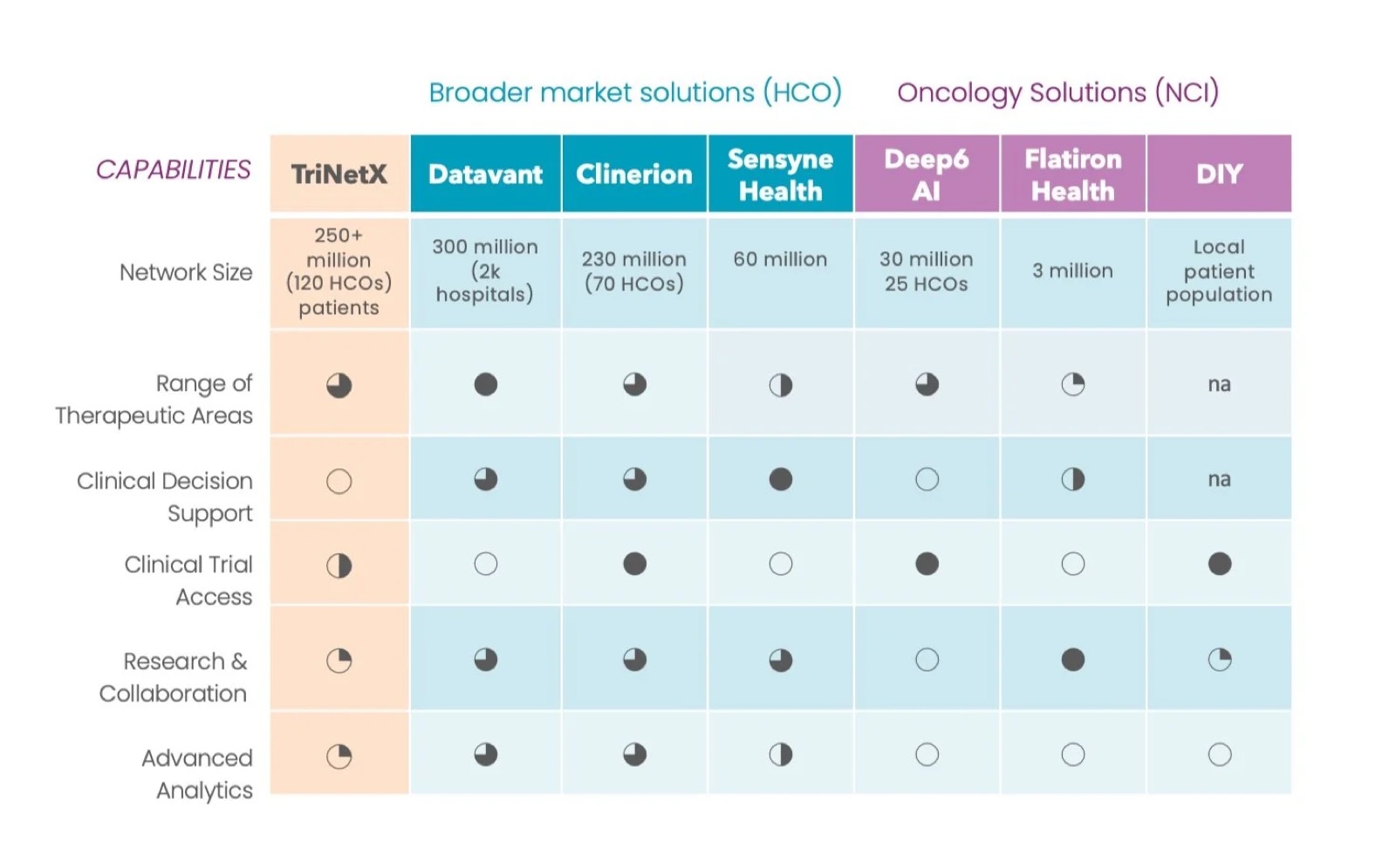
I compared TriNetX’s capabilities against competitors in the market. While TriNetX led in a variety of therapeutic areas, the most evident gap was clinical decision support — which most rivals already provided, presenting an opportunity to expand.
03
Ideation session
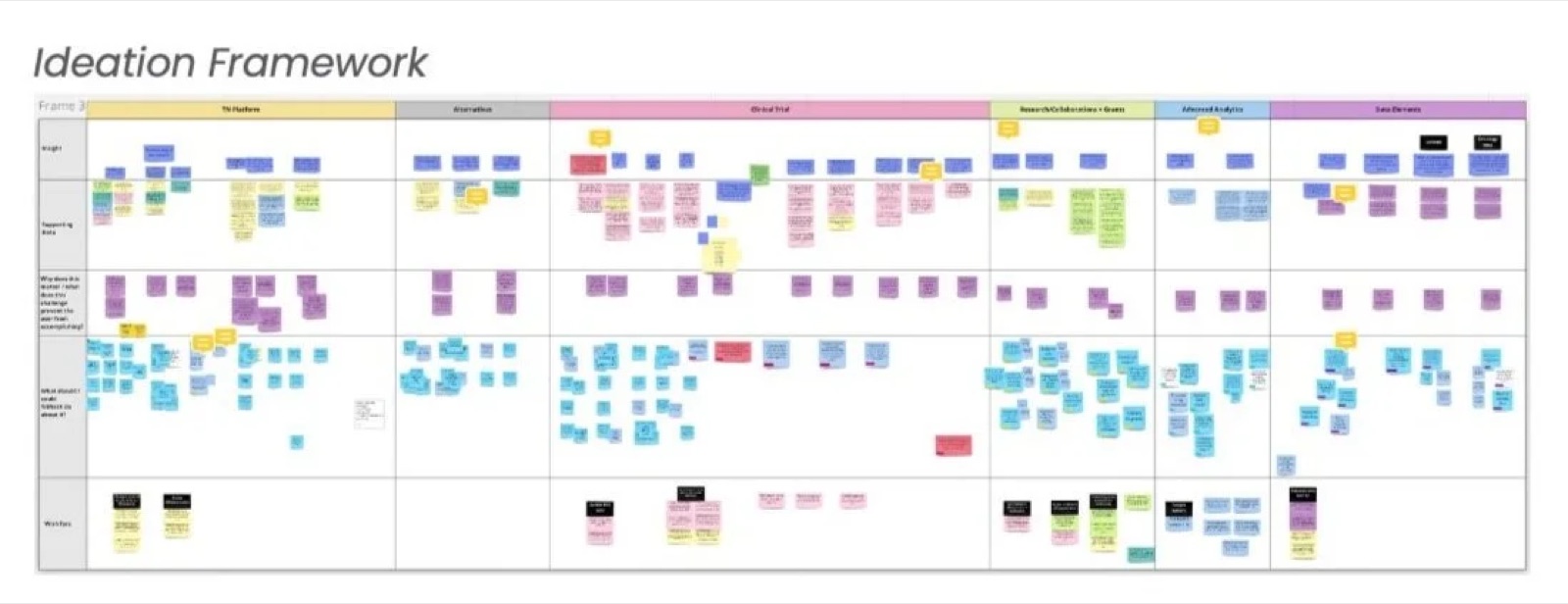
I led an ideation workshop with product, design, and engineering to identify opportunities across key pain points. We used divergent thinking to generate and cluster ideas, then prioritized them in a 2x2 matrix based on impact and roadmap alignment.
Mapping decision makers and influencers in the ecosystem to visualize value delivery across the TriNetX network.Competitor analysis across network size and key capabilities.Ideation framework and 2x2 prioritization.
Key insights
Communication gaps
Communication gaps make it hard to quantify and attribute impact.
Transparency before investment
HCOs are reluctant to invest in additional data access without transparency.
Barrier to entry
The platform is not intuitive, creating a barrier to deeper engagement.
Different data, not more links
Accessing linked data sets is not a priority; additional data sets may be more attractive.
Cumbersome data handling
Data handling complexities result in a cumbersome experience.
The result
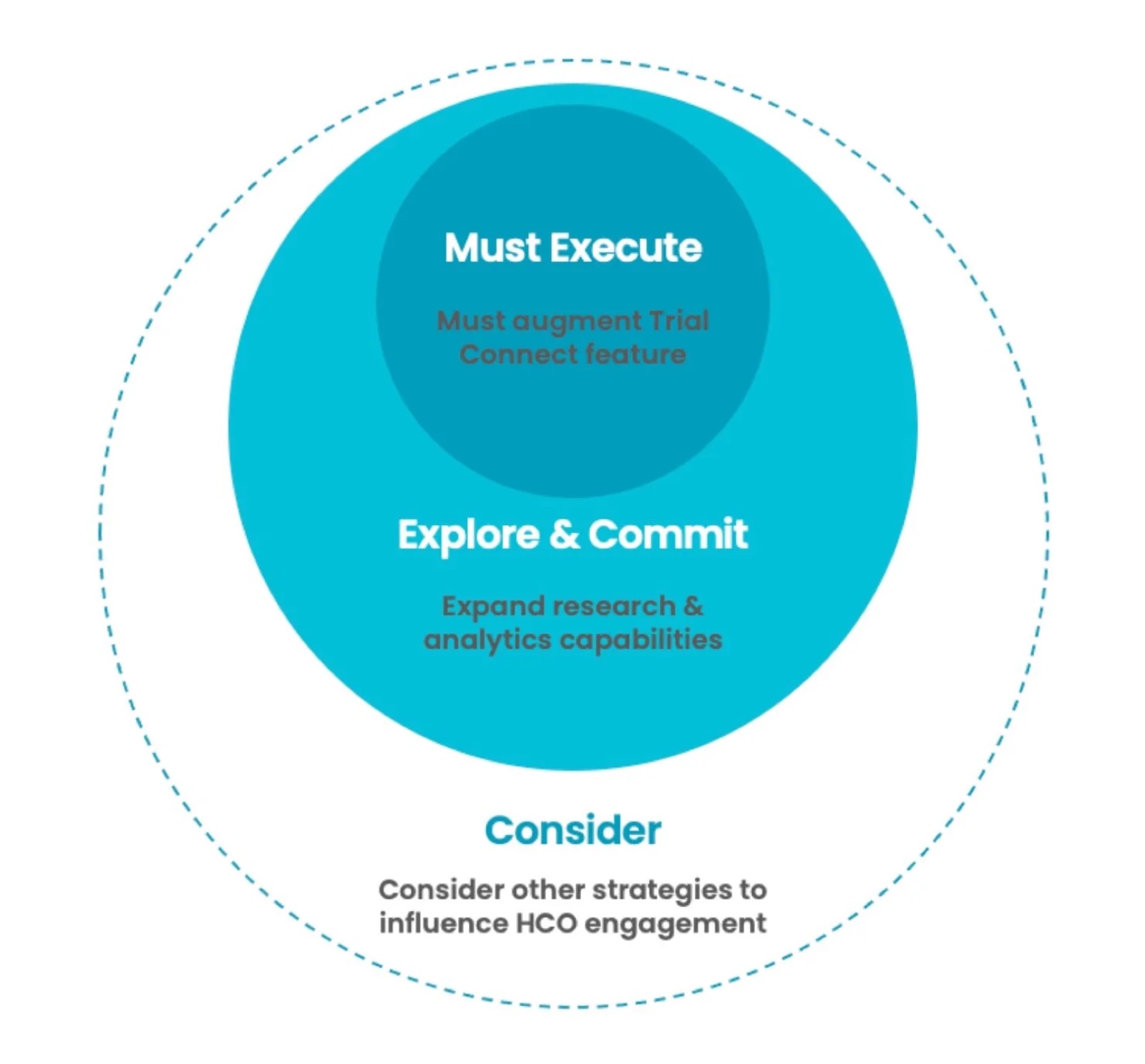
The research uncovered key friction points across communication, usability, and workflows that limited adoption and kept companies from realizing TriNetX’s value — particularly around the Linked feature. I translated these into strategic, actionable recommendations that streamline core tasks, reduce training needs, and align the platform with users’ day-to-day workflows.
Design direction: what TriNetX must execute, explore and commit to, and consider.
The impact
By implementing these recommendations, TriNetX would:
Demonstrate ROI to TriNetX members
Improve opportunity-to-site matching, benefiting sponsors and HCOs
Reduce HCO burden to drive adoption and usage
Expand Linked feature use cases and value to HCOs
Add hard-to-obtain but highly desired data sets
Make common tasks easier
Together, these would significantly improve platform engagement, drive adoption of Linked, and strengthen TriNetX’s value proposition through faster trial feasibility, better sponsor–HCO collaboration, and greater visibility into research outcomes.